 en
en
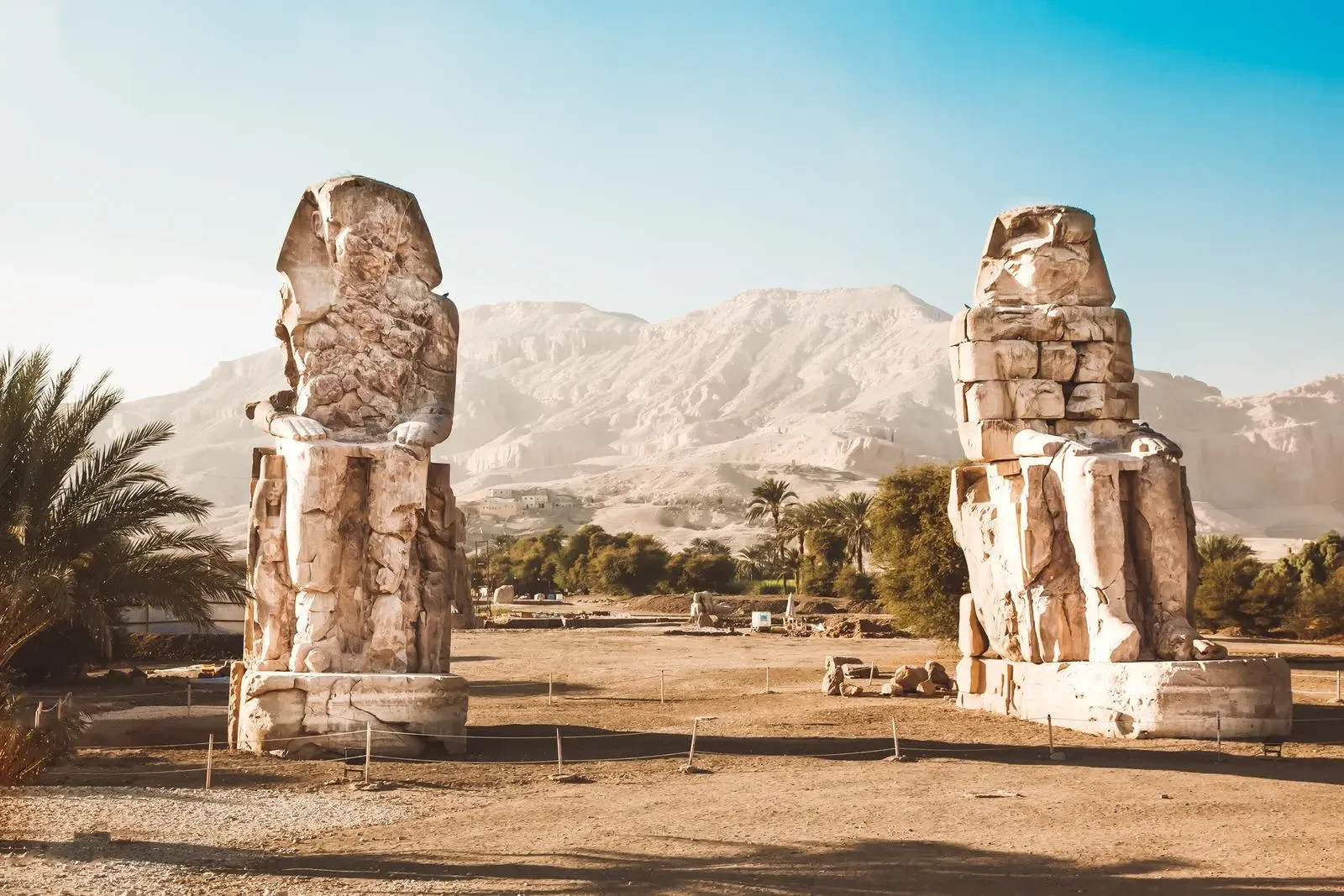
The two enormous statues in Upper Egypt are the Colossi of Memnon, on the west bank of the Nile in Egypt near Luxor. Originally built to commemorate the New Kingdom pharaoh Amenhotep III, these giant statues have silently kept watch over the massive mortuary temple of this former pharaoh for over 3,400 years, and are a commonly visited historical place for tourists in Egypt. If you’re a visitor looking to take a glimpse at some of the most recognizable pieces of ancient Egyptian history, then be sure not to miss the opportunity to pose for photos in front of the colossal figures while visiting sites in Egypt such as the Valley of the Kings or other well-preserved temples along the Luxor West Bank.
At roughly 18 meters (59 feet) high, these quartzite giants-though damaged over the millennia-serve as a potent symbol of the might and artistry of ancient Egyptian civilization and are featured on numerous Egypt tours visiting the region, drawing tourists from all over the globe.
Many ancient Greeks and Romans, drawn by the legend of their ancient “singing” property, were fascinated by the statues, claiming them to be magically empowered; today, the Colossi continue to awe visitors with their grandeur.
The Legend of the Colossi of Memnon in Luxor
Along the west bank of the Nile River in Luxor, two colossal stone figures come up out of the desert landscape, almost silently, looking over the land for more than three and a half millennia. These monumental statues called the Colossi of Memnon, act like lasting sentinels of ancient Thebes and they still feel like one of the strongest visual reminders of Egypt’s extraordinary civilization. At first, they were set as the grand entrance to the huge mortuary temple of Pharaoh Amenhotep III, one of the more influential rulers of Egypt’s 18th Dynasty. Even if the temple itself has mostly disappeared with time, the twin statues keep its story alive, and they give visitors a kind of rare, concrete link to an architectural masterpiece that’s no longer there. Colossi of Memnon remain a defining landmark in Luxor, drawing thousands from the globe for a visit to witness the magnificence of Egypt's glorious past. Located in the West Bank, next to some of the other major attractions of Upper Egypt, like the Valley of the Kings, the pair is part of every cultural trip in the country. The monumental size of the pair of stone figures dominating the desert landscape make it one of the most captured structures in the region. It's not just monuments from the past, these figures are also the perfect symbols of durability, endurance and ancient Theban glory.
History –The Era of Amenhotep III
These were constructed by the pharaoh Amenhotep III (18th Dynasty, circa 1350 BCE) at the request of Amenhotep II, son of Thutmose II and an important king of Egypt's 18th Dynasty, an era characterised by vast wealth, territorial expansion, art and architecture and public works, all to enhance and maintain a powerful reputation. These statues were located guarding the entrance to the king’s magnificent mortuary temple (also referred to as a funerary temple) designed to secure the eternal deification of his being. The temple itself has collapsed long ago and most of its stone material was utilized in the construction of elsewhere, so only the 2 figures remain.
Architectural Design, Construction, and Engineering Achievement
Size of the Colossi and Construction Of the nearly 18 metres (60 feet) in height, the statues each weighed 725 tons. They were hewn from blocks of quartzite, taken from the hills of Gebel el-Ahmar near present day Cairo, and shipped hundreds of kilometers to Thebes (modern Luxor), a significant feat of engineering given these are considered the largest blocks ever quarried and moved by any of the world’s civilizations. The colossi depict the pharaoh enthroned, looking east towards the sun, thus symbolising the renewal of life.
Seated next to the pharaoh is his Great Royal Wife, Tiye.
Next to his leg, is his mother, Mutemwiya.
The Mystical Singing of Memnon
One of the most interesting aspects of the Colossi of Memnon revolves around their purported singing. Following a devastating earthquake in 27 BCE that shattered the northern statue, a strange phenomenon occurred: when the cool morning air passed through the cracks in the stone, it produced a haunting, musical note. The Greek and Roman visitors to Egypt, familiar with the tale of the Trojan War hero Memnon who was said to be the son of dawn goddess Eos, interpreted this eerie sound as Memnon greeting his mother at sunrise.
The singing of Memnon made the site a hugely popular attraction in the ancient world and you can see graffiti by ancient tourists etched on the stone base of the colossi!
Eventually, in 199 CE, Emperor Septimius Severus had the broken statue repaired with solid blocks of granite, after which the singing miraculously ceased, leaving us to wonder whether the pharaoh or the mythical warrior had the last laugh.
Visiting the Colossi of Memnon
Today the Colossi of Memnon are still free for us to experience and offer another great example of the engineering prowess, talent, and artistic ability of ancient Egyptians. Carved for the pharaoh Amenhotep III, they stand guarding the west bank of Luxor where the ancient Theban necropolis is found and have stood for more than three thousand years!
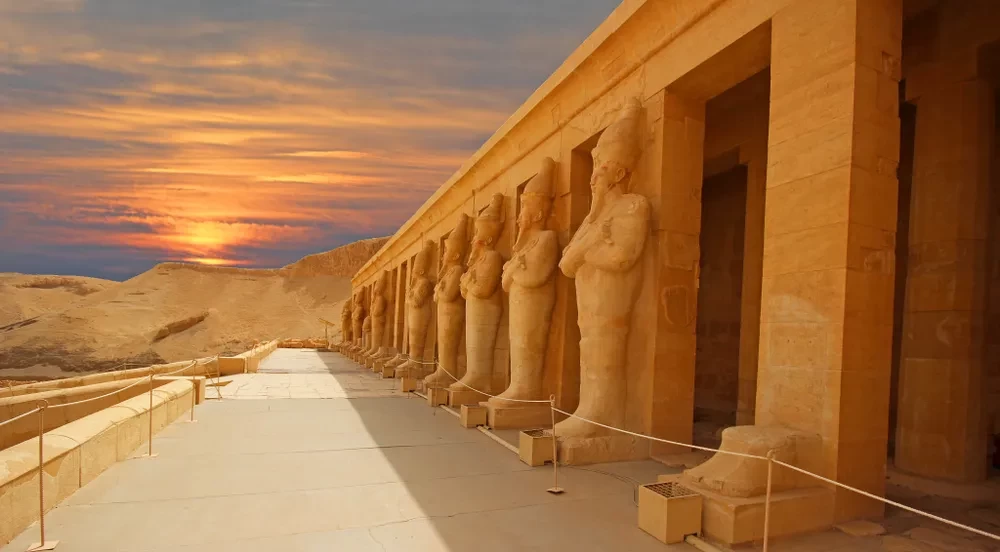
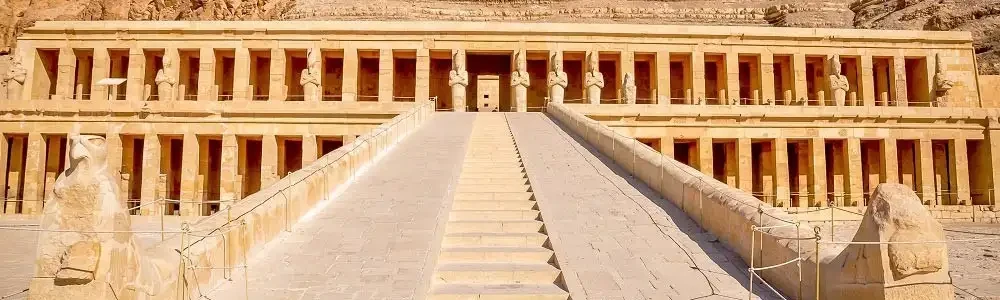
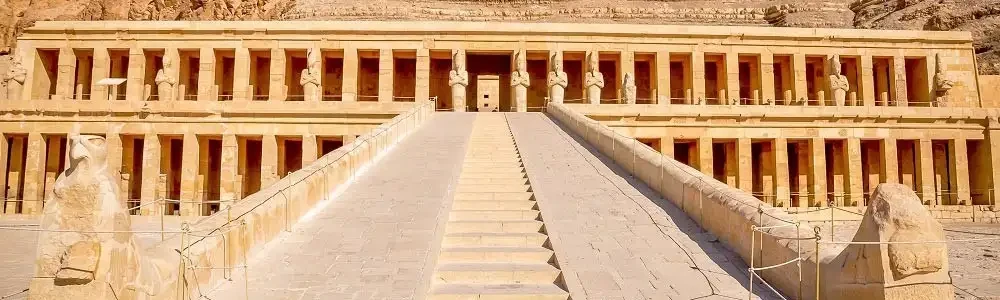
The Colossi of Memnon are one of the major sites that you can discover on the west bank of the Nile River in Luxor, the heart of the most celebrated ancient archaeological zone in Egypt. You will find them in most tour itineraries to Egypt and particularly on those which include the Temple of Hatshepsut, the Valley of the Kings, as well as other archaeological treasures from the pharaonic Thebes.














-(2)-webp.webp "Best Things to Do in Hurghada in 2026")







-webp.webp "Cairo Nightlife: Best Evening Activities")