 en
en
Ibn Tulun Mosque in Cairo: History & Visitor Guide
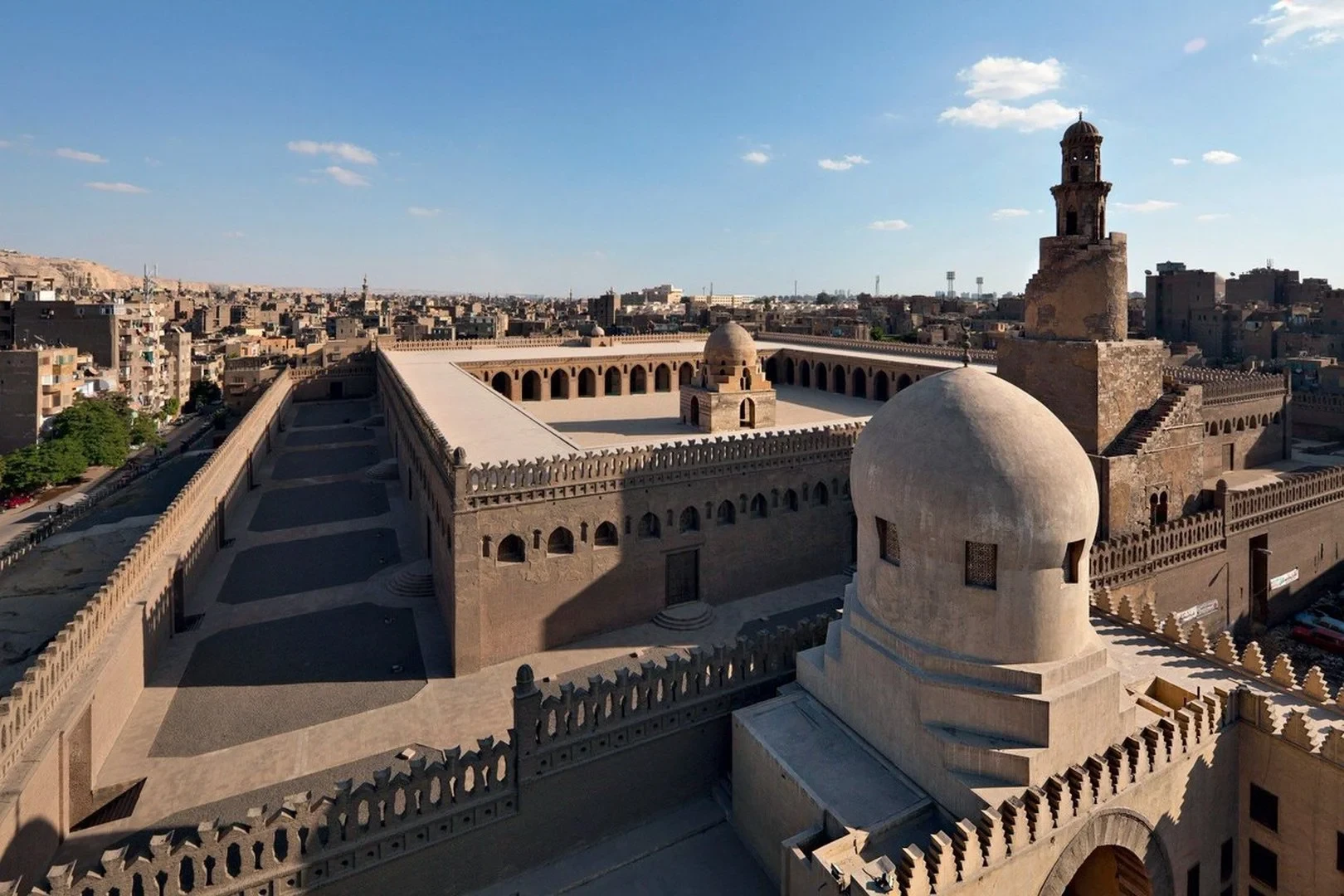
Ibn Tulun Mosque stands as one of Cairo’s remarkable Islamic landmarks. The mosque is famous for its courtyard, its unique spiral minaret, and its beautiful geometric decorations. It was built during the Tulunid period. Shows a key chapter in Egypt’s Islamic architectural history. Located in Historic Cairo, Ibn Tulun Mosque is closely linked to Ahmad Ibn Tulun and Al‑Qata’i, the center he founded. Today, visiting Ibn Tulun Mosque lets travelers see the architecture of the Tulunid era and experience another part of Cairo’s heritage. For anyone planning an Egypt Travel Guide Ibn Tulun Mosque is a cultural stop and a chance to explore Cairo’s Islamic heritage.
History of Ibn Tulun Mosque in Cairo
The history of Ibn Tulun Mosque in Cairo begins with Ahmad Ibn Tulun, the founder of the Tulunid dynasty in Egypt. He created Al-Qata'i as an administrative center and ordered the construction of the mosque to serve as its main congregational mosque. Work on the mosque started in 876 AD. Finished in 879 AD, making it one of the most significant surviving monuments from the Tulunid period.
The mosque was built on Jebal Yashkur, a site that today is known as Ahmad Ibn Tulun Square in the Sayyida Zaynab district. Its large size showed the importance of the administrative center and the rising power of Ahmad Ibn Tulun.
The Tulunid dynasty is a chapter in Egypt's medieval history. Egypt's Ministry of Tourism and Antiquities says that the Tulunids set up a state in Egypt during the Abbasid era and they ruled from 868 to 905 AD. In that period, Ahmad Ibn Tulun introduced improvements and cultural growth while making Al‑Qata'i his capital.
Many historic buildings have vanished over the centuries. Only fragments remain. The Ibn Tulun Mosque has preserved most of its appearance. Its wide layout and distinctive architectural details let visitors understand the vision behind the mosque and the world in which it was built.
Ibn Tulun Mosque is more than a place for prayer. It stands as an example of the Tulunid era and plays a major role in the story of Cairo’s architecture.
What Makes Ibn Tulun Mosque Unique
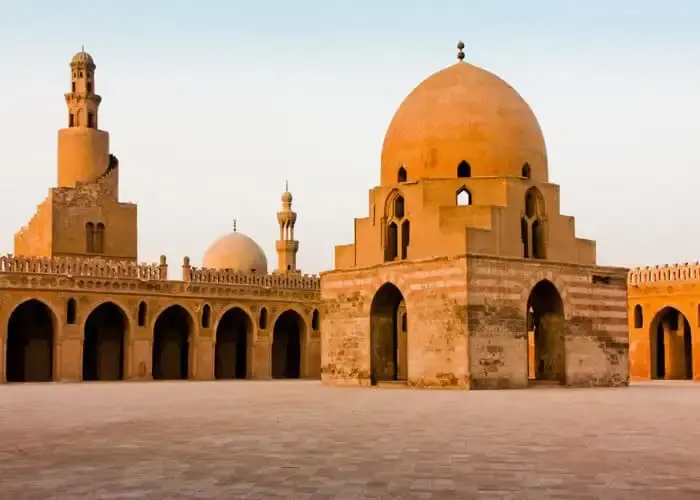
The architecture is one of the reasons Ibn Tulun Mosque stands out among Cairos historic mosques. The design of Ibn Tulun Mosque centers around an open courtyard surrounded by covered prayer areas creating a spacious setting that emphasizes light, air and geometric order.
The recognizable feature of Ibn Tulun Mosque is its spiral minaret. The design of the minaret is especially distinctive and is associated with architectural influences from Samarra in Iraq. The spiral minaret gives Ibn Tulun Mosque a profile and has become one of Ibn Tulun Mosques best-known visual features.
Another striking element of Ibn Tulun Mosque is the decoration surrounding the courtyard. The arches and windows feature stucco designs that incorporate floral patterns. These details show how decoration was integrated into the structure of Ibn Tulun Mosque without overwhelming its layout.
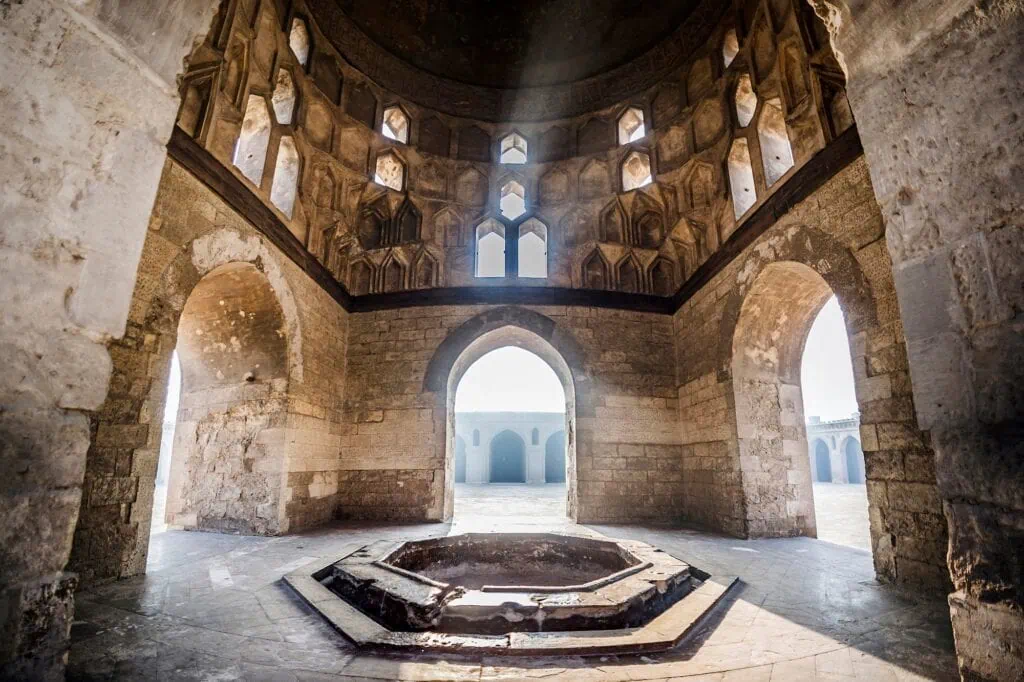
At the center of the courtyard of Ibn Tulun Mosque stands a water fountain covered by a dome supported by marble columns. The open courtyard, surrounding arcades, decorative stucco and spiral minaret of Ibn Tulun Mosque work together to create an architectural composition.
Ibn Tulun Mosque also contains six mihrabs, including a mihrab that is hollow and elaborately decorated. A mihrab marks the direction of prayer toward the Kaaba in Mecca making it both a functional and important architectural feature within Ibn Tulun Mosque.
For travelers interested in architecture these details make Ibn Tulun Mosque particularly rewarding to explore. Than focusing only on the age of Ibn Tulun Mosque visitors can appreciate the relationship, between the open spaces of Ibn Tulun Mosque, its decorative elements and its religious function.
What to See at Ibn Tulun Mosque?
A visit to Ibn Tulun Mosque allows travelers to explore remarkable architectural features in one historic site. Begin with the courtyard. It offers a sense of the mosque’s size and its unique design.
The Spiral Minaret: The spiral minaret is the recognizable part of the mosque. Its unusual shape stands out from minarets in Cairo. It shows influences from Samarra’s architecture. From angles around the mosque, visitors can see the minaret’s distinct form and structure.
The Open Courtyard and Fountain: The large central courtyard forms a open area. It is surrounded by covered arcades that provide shade and movement. In the middle of the courtyard a fountain with a dome draws attention. It acts as a visual center and helps balance the design of the space.
Decorative Arches and Windows: Take time to examine the arches and windows around the courtyard. They are decorated with stucco work that includes floral patterns. These details show how care was given to ornamentation within a relatively simple architectural style.
The Mihrabs: Visitors can also look at the mihrabs. These are the niches, in the wall that show the direction of prayer. The main mihrab stands out because of its design and beautiful decorations. It is a feature of the prayer area and adds to the spiritual atmosphere.
A Different View of Islamic Architecture:The mix of repeating arches, open spaces, patterned stucco and the spiral minaret gives the many different perspectives. Those who love architecture and photography will find much to appreciate. Take time to notice both the structural elements and the small decorative touches.
It is best not to rush through the mosque. Spend time walking through the complex. This allows an appreciation of how the design reflects the architectural traditions of the Tulunid period.
Visiting Ibn Tulun Mosque in Cairo
Ibn Tulun Mosque in Cairo is located in the historic part of the city and can be included in a wider exploration of Islamic Cairo. The official Egyptian Ministry of Tourism and Antiquities currently lists opening hours from 9:00 AM to 5:00 PM daily. Since visiting arrangements can change, travelers should check the official information before planning their visit.
The mosque can be combined with other historical attractions depending on your itinerary. Travelers interested in Cairo's Islamic heritage can explore the surrounding historic areas and continue toward other important monuments and streets.
Historic Cairo gives visitors a chance to explore Islamic architecture in depth. The official Experience Egypt guide points out places like Al-Muizz Street, Bayt Al-Suhaymi, Al-Aqmar Mosque and Khan El Khalili along with other historic sites. These spots show the beauty and history of design in Egypt.
For travelers who have time Cairo day tours can be a choice. These tours help put sites into one clear plan. A good day tour might include Ibn Tulun Mosque and nearby landmarks. This allows time to really enjoy each place of rushing from one, to another.
When visiting sites it's important to dress modestly. Travelers should also follow any rules posted at the location. It's an idea to take your time walking through the courtyard and looking closely at the details. This is especially true if you care about history or if you want to take photos.
If you love Egyptian history, Islamic architecture or cultural sightseeing Ibn Tulun Mosque stands out in Cairo. Including it in a Zoya Tours Egypt itinerary helps link this site with other historic places, across the city. It makes the trip more complete and meaningful.
For travelers researching Cairo before their trip, this landmark deserves a place in an Egypt Travel Guide because it offers a direct connection to the Tulunid period and demonstrates how architecture can preserve the story of an important chapter in Egypt's history.














-(2)-webp.webp "Best Things to Do in Hurghada in 2026")







-webp.webp "Cairo Nightlife: Best Evening Activities")

-webp.webp "Giza Pyramids Balloon: Everything You Need to Know")

-webp.webp "Full Day Tour Visiting Coptic and Islamic Cairo")